

Comic: THEM CATS in “Anchoring”
Anchors away, mateys! All it takes (sometimes) is noticing when you’re vulnerable. In this episode, Me Cat does the work of turning separation anxiety into emotional anchoring.

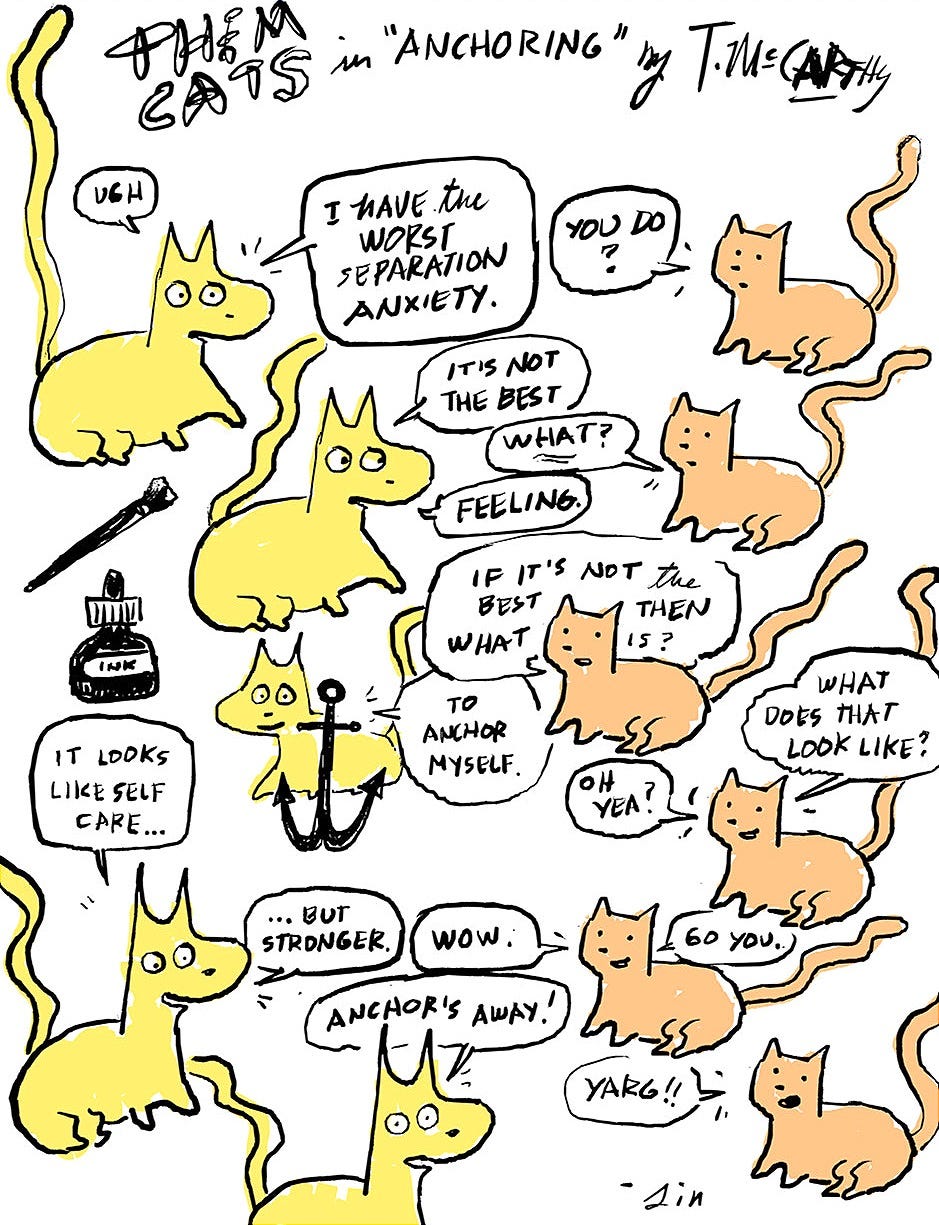
In today’s THEM CATS comic, Me Cat starts with that familiar ache: “I have the worst separation anxiety.” But watch what happens when Therapist Cat asks the simple question that changes things for our neurotic, yet lovable client, Me Cat: “If it’s not the best (feeling), then what is?”
Internal Family Systems (IFS) therapy acts similarly when we stop judging our difficult feelings and start getting curious about what they’re trying to tell us.
Me Cat’s discovery is beautiful—
• separation anxiety on the surface points towards a deeper need for self-care.
• learning how to anchor ourselves when we feel untethered are the steps to take for some radical self-care.
The visual of Me Cat literally holding an anchor while talking about emotional anchoring is a visual metaphor.
But What Is Emotional Anchoring?
“Anchoring” is a powerful NLP (Neuro-Linguistic Programming) technique that helps us stay grounded to ourselves. We center, especially when we’re feeling pulled in different directions by anxiety, relationships, or life’s storms. Instead of looking outside ourselves for stability, we learn to drop anchor in ourselves.
IFS invites us to make friends with the internal “parts” that are driving the emotional response. By listening to the parts with curiosity and compassion (like how Therapist Cat does), the person can address the root cause of the emotional pain and build internal trust within the self.
Me Cat shows us what this looks like: recognizing that the discomfort of separation anxiety can actually guide us toward stronger self-care practices.
Invitation: Try anchoring or grounding exercises
Anchoring Exercise 1: The 5-4-3-2-1 Grounding Technique
When separation anxiety hits, use your senses to anchor yourself in the present moment:
• 5 things you can see (like Me Cat’s ink bottle and anchor!)
• 4 things you can touch (the texture of your chair, maybe your dog or cat’s fur)
• 3 things you can hear (traffic, your heartbeat, the hum of appliances)
• 2 things you can smell (coffee, fresh air)
• 1 thing you can taste (mint, the lingering taste of lunch)
This pulls you out of anxious future-thinking/tripping and anchors you firmly in your body to keep from drifting out of the present moment.
Anchoring Exercise 2: The Internal Anchor Visualization
Just like Me Cat does, but…
1. Place one hand on your heart, one on your belly
2. Take three deep breaths and imagine dropping an anchor deep into your core
3. Ask your anxious part: “What do you need to feel safe right now?”
4. Listen without judgment/objectively/neutrally. Maybe this anxious side needs reassurance, boundaries, or self-care
5. Thank that part for trying to protect you, then anchor in what YOU need
The Magic of THEM CATS
What makes THEM CATS special? I think it is how it shows me I can externalize internal conversations I have. Me Cat (in yellow) represents the part of us that struggles, worries, and feels vulnerable. Therapist Cat (in orange) embodies our inner wisdom—one that has a compassionate voice. Therapist Cat also asks good questions and helps us find our own way.
We all have both cats inside us. The question is: are we talking to both?
Wait. At least with me, I’m truly talking to myself.
THEM CATS appears weekly, where therapy concepts may or may not be front and center of the adventures of two, crazy, nameless, non-binary cats who somehow understand each other.
Calling All Inner Therapists: Name that caption…
It’s time to come up with something Me Cat’s therapist would say.
(Is it a zinger? Or is it a ringer?)
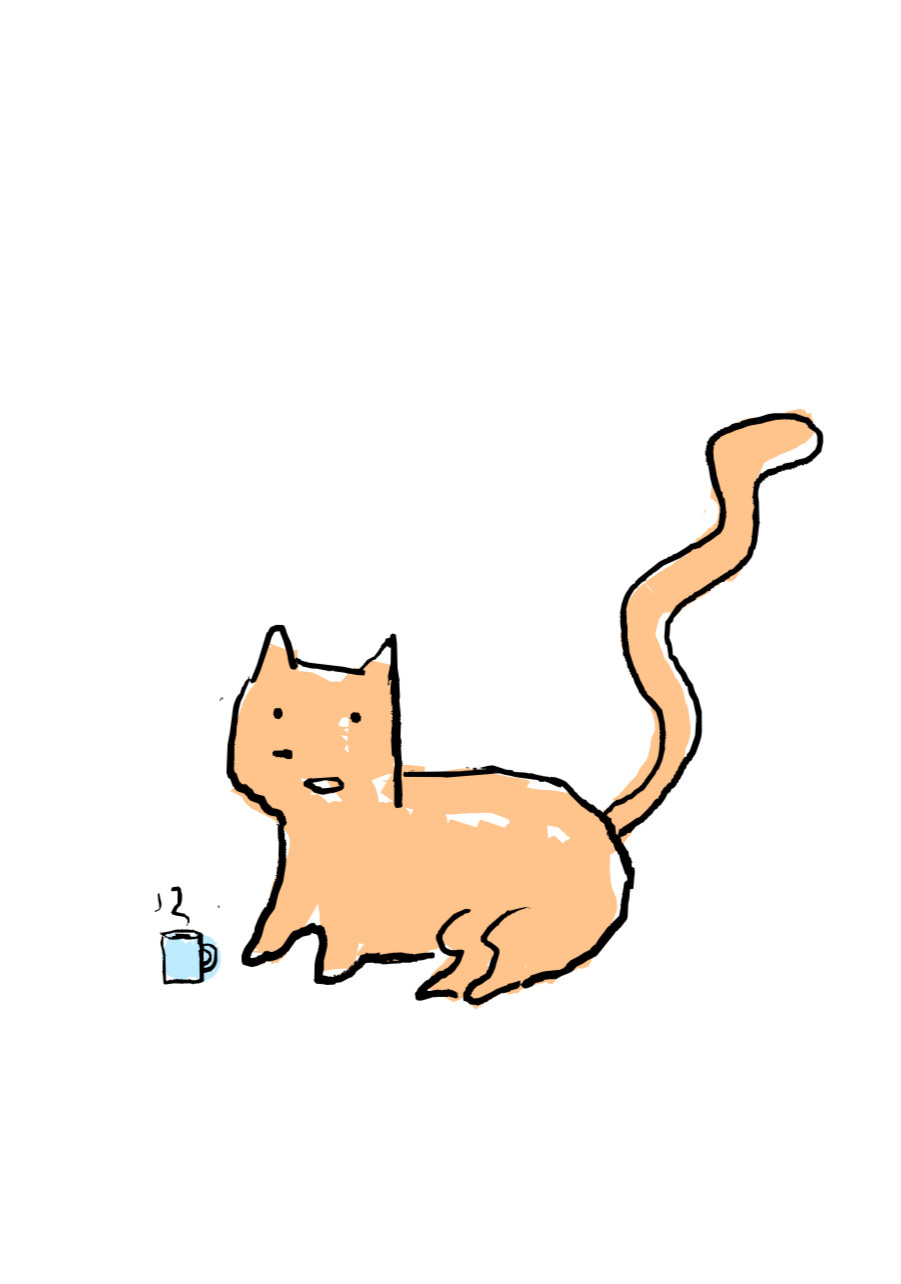
Therapist Cat has got a way about them.
I showed a new friend my webcomic a couple of weeks ago and he liked it! Then, when another person dropped in to talk to us, she wanted to know more about my comic about these two cats of mine.
“Wait. You have a comic where two cats are talking to each other? Cute!” I implore my new friend to describe THEM CATS, and we get his synopsis:
“There’s this really whacked out, neurotic cat that is always talking about their feelings—their feelings, right? Not it, really. Anyhow, the cat sees a therapist—who’s also a cat—who has this ‘I’m way out of my capacity to help’ look most of the time. It’s so expressive.”
Aww. I love hearing how people interpret THEM CATS! I get a lot of great feedback. It’s nice to hear:
“THEM CATS has got that look like its always been in existence. It’s so last century.”
“I really like the simple colors. The yellow cat is spazzy, and the mellow orange one is the therapist.”
In essence, it’s really me talking to myself.
At play in the comic is the concept of metacognition: thinking about our thinking.
The Post Script
VISUAL LIQUID MEGAZINE is a feminist forward lifestyle & poetry/art/photography publication. Its mission is to elucidate the work of the world’s most creative outliers. We celebrate rebels, renaissance women/femmes, BIPOC, Queer/LGBTQIA, disabled & aged creative forces
LIVE!
THEMCATS.COM - The therapeutic comic about two nameless, non-binary cats in therapy sessions has a new domain at themcats.com!
Disclaimer: THEM CATS is a work of fiction featuring nameless, non-binary cats navigating therapy and mental wellness themes. While inspired by real therapeutic concepts and personal experiences, all characters, situations, therapists, and dramatic revelations are fictionalized for entertainment and reflection purposes. This comic is not a substitute for professional mental health care, actual therapy, or veterinary advice (the cats are fine). If you have personal mental health concerns, please consult a licensed clinician - preferably one who accepts your insurance and won’t judge your choice to relate deeply to cartoon cats.
Will be using those anchoring techniques! Thaks, Tess!
Your comic nails it - turning inner chaos into something I can actually smile about. Seeing Me Cat anchor up while Therapist Cat asks the right questions makes me feel less alone with my own anxious parts. Thanks for making therapy ideas feel so real and relatable.